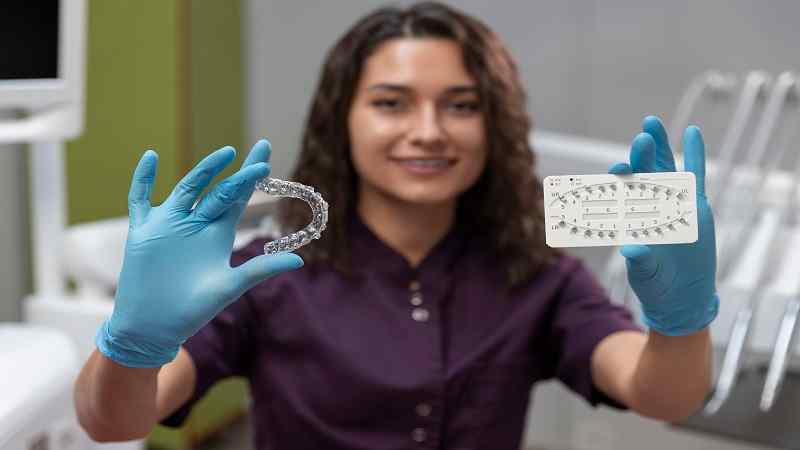
Finishing Invisalign treatment often feels like the finish line: months of wearing clear aligners, tracking progress, and finally seeing a straighter smile. But the period right after treatment ends is just as important as the treatment itself, and it’s one that a surprising number of patients underestimate: retainer wear.
Why Teeth Move Back Without a Retainer
Teeth are held in position by a combination of bone, ligament, and surrounding tissue, all of which take time to fully stabilize after orthodontic movement. Immediately after Invisalign treatment, teeth are still somewhat prone to shifting back toward their original position, a process often called relapse. This isn’t a flaw in the treatment itself; it’s simply how the mouth naturally behaves as it adjusts to a new alignment.
Retainers exist specifically to hold teeth in place while that stabilization process happens, and for many patients, continued part-time wear well beyond the initial stabilization period helps maintain results long-term.
The Common Mistake Patients Make
One of the most frequent issues after completing Invisalign treatment in Scarborough is inconsistent retainer wear once the initial excitement of finishing treatment fades. It’s an easy habit to let slip, missing a night here, forgetting the retainer case while travelling there, and each lapse gives teeth a small window to begin shifting. Because the movement is often gradual, patients sometimes don’t notice until a retainer that used to fit perfectly suddenly feels tight or uncomfortable, a sign that some relapse has already occurred.
How Long Retainer Wear Should Continue
Retainer schedules typically start with near-constant wear in the months immediately after treatment, then gradually reduce to nighttime-only wear over time. Many providers recommend some degree of nighttime retainer use indefinitely, since teeth can continue to shift subtly throughout life, even years after orthodontic treatment has ended. Treating retainer wear as a long-term habit, rather than a temporary requirement, tends to produce the most durable results.
What Happens If a Retainer Is Lost or Damaged
Retainers do wear out or get lost, and when that happens, it’s worth addressing quickly rather than waiting. The longer teeth go without retention support after a lapse, the more likely some degree of shifting becomes. Most providers can arrange a replacement fairly quickly, which is far simpler and more affordable than addressing significant relapse after the fact.
Protecting the Investment
Invisalign treatment is a meaningful investment of time and money, and retainer wear protects that investment long after the aligners are no longer needed. Treating the retainer phase with the same consistency as the original treatment is often the difference between a smile that stays straight for years and one that gradually drifts back toward where it started.