The decision to get a tattoo is often a significant one, and equally impactful is the choice to have one removed. For those looking to erase unwanted ink, the process might seem complex. Fortunately, laser technology has revolutionized tattoo removal, transforming it from a procedure with uncertain outcomes into a precise and effective science.
We are currently in a dynamic period where established laser methods are being refined and combined with innovative regenerative approaches. Q-switch lasers, known for their ability to shatter tattoo pigments, have long been a cornerstone of this field. Now, a deeper understanding of the body’s natural healing and regenerative capabilities is further enhancing these treatments. This broader focus on skin health and recovery is part of the exciting evolution in aesthetic skin and body treatments.
We will explore the intricate workings of Q-switch laser tattoo removal. We will compare its mechanisms with other advanced laser technologies, and crucially, examine how the principles of regenerative aesthetics are improving treatment results. We’ll cover everything from specific laser wavelengths and multi-pass techniques to essential aftercare, aiming for not just effective pigment clearance, but also superior skin quality and accelerated recovery.
Regenerative aesthetics represents a paradigm shift in how we approach skin health and recovery. Instead of merely treating symptoms or removing unwanted elements, this field focuses on stimulating the body’s inherent healing and rejuvenation processes. In the context of laser tattoo removal, this means that while the laser effectively fragments the ink, the body’s cellular signaling, extracellular matrix remodeling, and collagen synthesis are pivotal for both clearing the fragmented pigment and restoring the skin to its optimal state.
The goal is to enhance dermal repair, ensuring that the skin not only becomes tattoo-free but also maintains its integrity, elasticity, and healthy appearance. This involves understanding the intricate biological responses triggered by laser energy and optimizing them for superior outcomes. The effectiveness of laser tattoo removal, therefore, is a dual effort: the precise action of the laser and the robust regenerative capacity of the treated skin.
Feature Photothermal Energy Delivery Photomechanical Energy Delivery Primary Action Heat absorption, thermal damage Acoustic shockwaves, mechanical fragmentation Pulse Duration Longer (milliseconds to seconds) Shorter (nanoseconds to picoseconds) Target Water, melanin, hemoglobin, bulk tissue Specific chromophores (e.g., tattoo ink) Mechanism Coagulation, vaporization, ablation Photoacoustic effect, cavitation Collateral Damage Higher thermal spread Minimal thermal spread Application Hair removal, skin tightening, resurfacing Tattoo removal, pigmented lesions Cellular Mechanisms in Regenerative Aesthetics
The impact of laser treatment extends far beyond the immediate fragmentation of tattoo ink. At a cellular level, the process initiates a complex cascade of regenerative responses. Key players in this biological symphony include macrophages, which are immune cells vital for clearing the shattered ink particles. Following laser exposure, these macrophages are activated, migrating to the treatment site to engulf and transport the microscopic pigment fragments away from the skin.
Simultaneously, fibroblasts, the primary cells responsible for producing collagen and elastin, are stimulated. This fibroblast proliferation leads to increased collagen synthesis and remodeling of the extracellular matrix, which is the scaffolding that provides structural support to the skin. This dermal repair is crucial for maintaining skin integrity and texture. Furthermore, a cytokine response is triggered, orchestrating the inflammatory and healing phases, while exosome signaling facilitates intercellular communication, guiding the regenerative processes and optimizing the skin’s recovery trajectory.
Photoacoustic Energy and Dermal Remodeling
Q-switch lasers are distinguished by their ability to deliver energy in extremely short, high-intensity pulses, typically in the nanosecond range. This rapid energy delivery creates a unique phenomenon known as the photoacoustic effect. Instead of primarily heating the tissue (photothermal effect), the laser energy is absorbed by the tattoo ink, causing it to rapidly expand and contract. This generates powerful acoustic shockwaves that mechanically shatter the ink particles into much smaller fragments.
During this process, plasma formation and microscopic cavitation (the creation of tiny steam bubbles) occur within the ink particles. This mechanical fragmentation is highly selective, targeting the ink while minimizing thermal damage to the surrounding skin tissue. The controlled micro-trauma induced by these acoustic shockwaves also plays a significant role in stimulating dermal remodeling. This means that beyond just removing the ink, the laser treatment can encourage the skin to rebuild and rejuvenate its underlying structure, potentially improving overall skin texture and elasticity over several months.
Energy-Based Modalities in Deep Pigment Fragmentation
The effectiveness of laser tattoo removal hinges on the precise delivery of energy to the tattoo ink. Q-switch lasers, operating with nanosecond pulses (billionths of a second), were once considered the gold standard. These pulses are fast enough to match the thermal relaxation time of tattoo ink particles, which is approximately 10 nanoseconds. This means the energy is delivered and absorbed by the ink before the heat can dissipate into the surrounding tissue, preventing widespread thermal damage.
More recently, picosecond lasers (trillionths of a second) have emerged, offering even shorter pulse durations. Both Q-switch and picosecond lasers are designed to create a photoacoustic effect, shattering ink particles with minimal collateral thermal injury. However, the ultra-short pulses of picosecond lasers are theorized to create a more pronounced photoacoustic effect, potentially leading to faster ink fragmentation and fewer overall treatment sessions, particularly for stubborn colors. A key challenge in multi-pass treatments is optical shielding, where initial pigment destruction can create micro-cavitation that blocks subsequent laser pulses from reaching deeper ink. This is why advanced techniques and laser designs focus on overcoming this barrier.
Clinical Applications of Regenerative Aesthetics in Skin Recovery
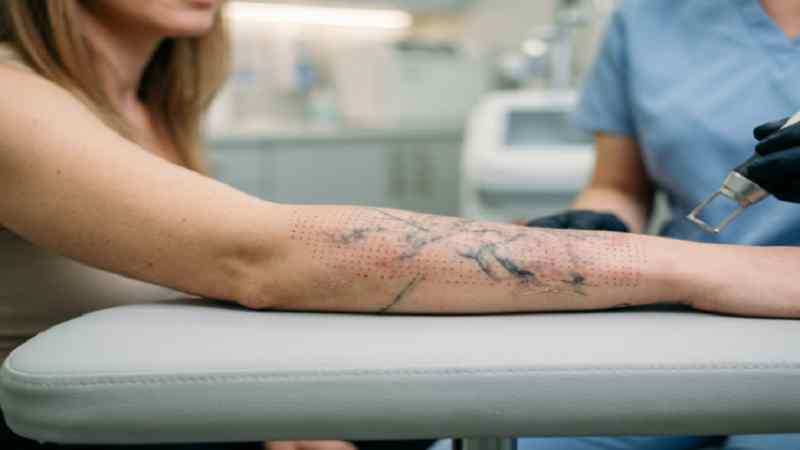
Integrating regenerative aesthetics into laser tattoo removal protocols significantly elevates the patient experience and outcome. Beyond merely clearing ink, the focus shifts to optimizing skin health and accelerating recovery. This involves stimulating the skin’s natural repair mechanisms, such as collagen and elastin production, and promoting healthy cellular turnover. For instance, fractional micro-drilling, sometimes referred to as the Frac-Tat method, is an innovative technique that combines the mechanical action of creating microscopic channels in the skin with traditional laser passes. These micro-channels allow trapped gases (the “popcorn effect”) to escape, enabling multiple full-beam passes in a single session without lengthy waiting periods. This not only enhances pigment removal but also promotes rapid re-epithelialization and can facilitate the delivery of regenerative topicals like peptides, further boosting skin recovery.
Clinics committed to comprehensive skin wellness, like those offering diverse aesthetic skin and body treatments, are increasingly incorporating these advanced regenerative strategies. By supporting the skin’s intrinsic healing capabilities, we aim for faster recovery times, minimized side effects, and superior cosmetic results, ensuring the treated area looks as healthy and natural as possible.
Wavelength Targeting and Chromophore Selectivity
One of the most critical aspects of successful laser tattoo removal is selecting the correct laser wavelength. This principle, known as chromophore selectivity, dictates that different ink colors absorb specific wavelengths of light more effectively. Using the appropriate wavelength ensures maximum ink fragmentation with minimal impact on surrounding skin.
- 1064 nm Nd:YAG: This wavelength is highly effective for targeting dark pigments, particularly black and dark blue inks. Its longer wavelength allows for deeper penetration into the dermis, making it suitable for deeply embedded professional tattoos and generally safer for use on darker skin tones (Fitzpatrick types IV-VI) due to its lower absorption by epidermal melanin.
- 532 nm KTP (Frequency-Doubled Nd:YAG): This wavelength is ideal for warmer colors such as red, orange, and yellow inks. It is absorbed more superficially, making it effective for pigments closer to the skin’s surface.
- 755 nm Alexandrite: This wavelength excels at removing green and light blue pigments, which can be particularly stubborn.
- 694 nm Ruby: Similar to Alexandrite, the Ruby laser is also very effective for green, blue, and purple inks. However, due to its higher melanin absorption, it carries a greater risk of hypopigmentation in darker skin types compared to 1064 nm Nd:YAG.
A comprehensive Q-switch laser system often includes multiple wavelengths or dye handpieces to address the full spectrum of tattoo colors, ensuring that even multi-colored tattoos can be effectively treated.
Advanced Multi-Pass Protocols and Clearance Optimization
To enhance the efficiency and speed of tattoo removal, advanced multi-pass protocols have been developed. Traditionally, a single pass of the laser would be performed, and then patients would wait weeks for their next session. However, the immediate whitening or “frosting” effect that occurs during treatment, caused by sub-epidermal gas bubbles, can block subsequent laser energy from reaching deeper ink.
The R20 protocol addressed this by recommending a 20-minute wait between consecutive passes in a single session, allowing the frosting to subside. While effective, this significantly extended treatment times. A more recent advancement is the R0 protocol, which utilizes topical perfluorodecalin (PFD). PFD is a clear, inert liquid that, when applied to the skin immediately after a laser pass, rapidly clears the optical gas bubbles. This allows for immediate re-treatment, enabling multiple passes (often up to four) in a single session without the 20-minute waiting period. This significantly reduces the total time spent in the clinic per session and can lead to faster overall clearance.
Lymphatic Phagocytosis and Systemic Elimination
The laser’s role in tattoo removal is to fragment the ink, but the body’s immune system is responsible for the actual elimination. Once the large ink particles are shattered into microscopic fragments by the laser’s photoacoustic effect, they become small enough for the body’s defense mechanisms to handle. Macrophages, specialized white blood cells, are activated and migrate to the treated area. These macrophages then engulf the tiny ink particles through a process called phagocytosis.
After engulfing the ink, the macrophages transport these particles through the lymphatic system, which is part of the immune system responsible for clearing waste and toxins from the body. The lymphatic drainage eventually carries the ink to lymph nodes, where it is filtered and permanently eliminated. This natural biological process takes time, which is why treatment intervals are crucial. Typically, sessions are spaced 6 to 8 weeks apart, extending to 12 weeks for later sessions. This allows adequate time for the macrophages to clear the fragmented pigment and for the skin to heal. Factors like vascular circulation and tattoo location also influence clearance speed; tattoos on areas with robust blood flow (e.g., torso) tend to clear faster than those on extremities (e.g., hands, feet) due to more efficient lymphatic drainage.
Addressing Underlying Scarring and Demarcation
It is important to understand that the tattooing process itself can sometimes cause scarring, which may not be visible until the ink is removed. Laser tattoo removal, when performed correctly, is designed to minimize new scarring. However, the removal process can reveal these pre-existing scars, which might appear as textural changes or raised areas once the pigment is gone.
Another consideration is the potential for a “ghosting effect,” where a faint outline or silhouette of the original tattoo remains even after most of the ink has cleared. This can be due to residual pigment or subtle changes in skin texture. Experienced practitioners employ careful techniques, such as peripheral fading passes, to ensure a smooth transition between the treated and untreated skin, avoiding sharp demarcation lines. Managing the immediate clinical endpoint of sub-epidermal vacuolization (frosting) is also key; while a necessary sign of effective treatment, excessive or improperly managed frosting can contribute to adverse outcomes. Regenerative aftercare protocols play a vital role in supporting healthy skin remodeling and minimizing any textural irregularities.
Safety, Skin Phototypes, and Adverse Event Prevention
Ensuring patient safety is paramount in laser tattoo removal, especially given the diversity of human skin tones. The Fitzpatrick phototyping scale is a crucial tool used to classify skin based on its response to sun exposure, which correlates with melanin content. Melanin, the pigment that gives skin its color, can interfere with laser energy, particularly shorter wavelengths that are more readily absorbed by it. This increased absorption in darker skin types (Fitzpatrick IV-VI) raises the risk of adverse effects such as burns, blistering, and pigmentary changes.
To mitigate these risks, test patching is an essential safety measure. A small, inconspicuous area of the tattoo is treated with the laser to observe the skin’s reaction before a full session. This helps in determining the optimal laser settings and assessing the potential for post-inflammatory hyperpigmentation (PIH), a common temporary darkening of the skin that can occur after laser treatment, particularly in individuals with higher melanin content. Strict adherence to safety protocols and individualized treatment plans are vital for successful and safe outcomes.
Protecting Melanin in Darker Skin Tones
Treating individuals with darker skin tones (Fitzpatrick types IV-VI) requires particular care and expertise to minimize the risk of complications. Melanin in the epidermis can absorb laser energy, leading to unintended heating and potential damage, such as hyperpigmentation (darkening) or hypopigmentation (lightening).
For these skin types, the 1064 nm Nd:YAG laser is often the preferred choice. Its longer wavelength penetrates deeper into the dermis while being less absorbed by epidermal melanin, significantly reducing the risk of pigmentary changes. Shorter wavelengths, such as the 694 nm Ruby or 532 nm KTP, must be used with extreme caution or avoided altogether due to their higher melanin absorption. Careful fluence titration (adjusting energy levels), larger spot sizes, and longer treatment intervals are critical strategies to protect melanin and ensure safe, effective treatment. While hyperpigmentation is often temporary, hypopigmentation can be more persistent, making preventive measures crucial.
Preventing Paradoxical Darkening and Complications
Beyond general pigmentary changes, certain tattoo inks can react unexpectedly to laser treatment, leading to a phenomenon known as paradoxical darkening. This primarily occurs with cosmetic tattoos (e.g., permanent makeup) or light-colored inks containing metallic compounds like titanium dioxide or ferric oxide. When these inks are exposed to laser energy, they can undergo a chemical reduction, causing them to turn dark brown or even black, making them much more challenging to remove. A test patch is invaluable in identifying this potential reaction before treating the entire tattoo.
Other potential complications include blistering, crusting, and, rarely, infection. Proper post-treatment aftercare, including keeping the area clean, applying prescribed ointments, and avoiding sun exposure, is crucial for preventing these issues. Patients should also be screened for pre-existing conditions like herpes simplex, as laser treatment can trigger outbreaks. Overall, a thorough consultation, careful technique, and diligent aftercare are essential for minimizing risks and ensuring the best possible outcome.
Frequently Asked Questions About Skin Regeneration and Pigment Clearance
How do regenerative therapies accelerate healing after laser treatments?
Regenerative therapies work by enhancing the body’s natural repair mechanisms, leading to faster and more efficient healing after laser treatments. These approaches often involve applying specialized topical products such as growth factors, peptides, or exosomes, which are rich in signaling molecules. These components promote faster barrier restoration by supporting the skin’s protective outer layer, significantly reduce inflammation that can prolong healing, stimulate the production of new collagen and elastin, and accelerate cellular turnover. The net effect is quicker resolution of post-treatment redness and swelling, improved skin quality, and a reduced risk of scarring or pigmentary changes, ultimately optimizing the overall recovery process.
Why are treatment sessions spaced weeks apart during pigment removal?
The spacing between laser tattoo removal sessions is critical because the body requires time to process and eliminate the fragmented ink particles. After a laser treatment, the high-energy pulses shatter the tattoo ink into microscopic fragments. These tiny particles are then recognized as foreign by the body’s immune system. Macrophages, a type of white blood cell, engulf these fragments and transport them through the lymphatic system for natural excretion. This biological clearance process takes several weeks. Spacing sessions typically 6 to 8 weeks apart (and sometimes longer for later sessions) allows sufficient time for this natural macrophage-mediated clearance, minimizes stress on the skin, and reduces the risk of over-treating, which can lead to adverse effects or scarring. It also ensures that each subsequent session targets fresh pigment, leading to more effective removal.
What distinguishes photoacoustic lasers from traditional thermal devices?
The primary distinction between photoacoustic lasers (like Q-switch and picosecond lasers) and traditional thermal devices lies in their pulse duration and mechanism of action. Photoacoustic lasers deliver extremely short pulses of energy (nanoseconds to picoseconds), which are absorbed by the tattoo ink so rapidly that they create a mechanical, acoustic shockwave that shatters the pigment particles. This process, known as the photoacoustic effect, generates minimal heat in the surrounding tissue. In contrast, traditional thermal devices use longer pulse durations, relying on heat to coagulate or vaporize tissue. While effective for some applications, this can cause more collateral thermal damage to surrounding skin, increasing the risk of scarring and prolonged recovery. Photoacoustic lasers are highly selective for pigment, effectively breaking it down while sparing the surrounding healthy skin.
Conclusion
The journey of tattoo removal has evolved dramatically, moving beyond simple ink eradication to embrace the sophisticated principles of regenerative aesthetics. Q-switch laser technology remains a powerful and effective tool, continuously refined with advancements like multi-pass protocols and precise wavelength targeting. However, the true progress lies in our deeper understanding of how these energy devices interact with the body’s innate capacity for cellular renewal and repair.
By integrating regenerative strategies, we are not just removing tattoos; we are fostering healthier, more resilient skin. This holistic approach, combining cutting-edge laser physics with biological healing, underscores the importance of individualized care, meticulous technique, and comprehensive aftercare. As research continues to unveil new insights into cellular signaling and tissue regeneration, we anticipate even more remarkable advancements, promising even safer, faster, and more cosmetically pleasing outcomes for those seeking a fresh start.