
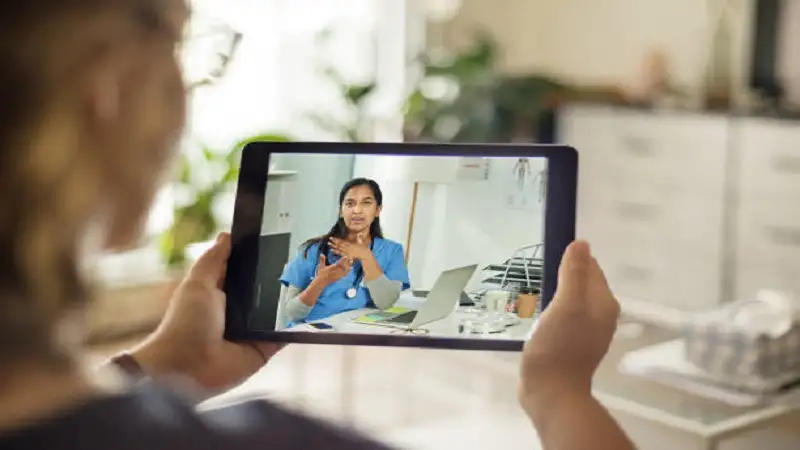
One of the most significant challenges facing public health systems today is health misinformation. Social media, messaging apps, and informal networks transmit information much faster than evidence-based instructions, and false or misleading information spreads very quickly. Misinformation undermines trust, slows care, and adversely affects health outcomes by fostering vaccine skepticism and misunderstandings about chronic disease management. Health educators are vital and more strategic in such a setting.
The greater the extent of misinformation, the higher the requirements for advanced training and leadership. Educational initiatives such as an EdD in health education train experts not only to teach health concepts but also to anticipate and address systemic responses to misinformation across communities, institutions, and policy arenas.
Why Health Misinformation Is So Difficult to Counter
Health misinformation is successful because it is emotional, easy to consume, and often presented through personal stories rather than facts. The algorithms amplify content that evokes fear or outrage, whereas accurate health information is often subtle and conditional. This disequilibrium lends misinformation greater credibility, even when it is clearly false.
Complicating matters is the decline in confidence in institutions. Many people trust peers, influencers, or anonymous sources more than official health authorities. Health educators will thus be forced to work in an environment in which authority is no longer persuasive and credibility must be built regularly.
Health Educators as Trusted Intermediaries
Health educators occupy an unusual position between science and the public. Health educators work with communities over prolonged periods and across various locations, whereas clinicians typically have limited time with patients, such as in schools, workplaces, nonprofits, or government agencies.
The continuity of this interaction helps health educators to establish trust and customise messages to cultural, social, and linguistic contexts. The greatest antidote to misinformation is trust. When communities trust the messenger, they are less likely to be skeptical of false claims and more likely to demand clarification rather than reinvent misguided beliefs.
Moving Beyond Information Delivery
Bringing the fight against misinformation does not just take fixing facts. Studies have consistently shown that providing accurate information is not always an effective way to change entrenched beliefs. It is described that behavior change theory, health literacy models and motivating communication strategies are training strategies used by health educators to overcome this challenge.
Good health education is like critical thinking, media literacy and decision-making. Instead of instructing people on what they should believe, educators assist people to analyze the sources, detect bias and comprehend uncertainty. The strategy creates sustained immunity to fake news rather than addressing individual instances.
Addressing Misinformation at the Community Level
Social networks characterized by shared identity and values are often the means by which misinformation spreads. The community-level health educators are the only ones in a position to intervene in such spaces. After working with local leaders, faith groups, schools and advocacy groups, educators are able to localize information about health in ways that are locally appreciated.
Community-based methods also enable health educators to detect emerging misinformation in a timely manner. Concerning or confusing trends are usually visible in local discussions and later become national trends. Misinformation can be avoided at an earlier stage.
The Importance of Systems-Level Leadership
Misinformation is becoming increasingly sophisticated, so individual-level interventions are no longer effective. Health educators are being asked to implement system-wide strategies that combine education, communication, and policy.
Furthermore, health educators are prepared to design, evaluate, and scale these interventions at the doctoral level. Well-prepared leaders can influence curriculum design, institutional communication methods, and population-level health campaigns that are proactive and focused on addressing misinformation rather than crises.
Digital Platforms and the New Health Education Environment
The online community has completely transformed the way people consume health information. Health educators now need to understand platform dynamics, algorithmic amplification, and online interaction tactics. This does not imply that it competes with influencers in terms of volume or virality, but clarity, credibility, and consistency.
Health educators are also contributing to the development of digital health literacy programs that teach people how to use online information safely. These attempts help people distinguish between credible sources and material intended to confuse or manipulate.
Ethical Responsibility and Professional Credibility
Health educators have a moral obligation to remain truthful about uncertainty and evolving evidence. Overconfidence or oversimplification can work against one and strengthen scepticism when guidance is modified. Open communication fosters credibility, even when providing partial answers.
Moreover, health educators serve as role models for ethical communication, demonstrating how science works in practice. This openness can help dispel the notion that changes in recommendations are deceptive rather than progress.
Preparing Future Health Education Leaders
Leadership development is necessary given the scale and intensity of health misinformation. The health educators should be ready to lead, not just to teach, but also to organize teams, not only to make policy but to cooperate within different sectors.
This is done through health educators. They are critical to safeguarding public health by bridging the worlds of science and society, fostering health literacy and systemic change. The expertise and skills of well-equipped health educators will be among the most significant safeguards against misinformation, which is expected to grow over time.