
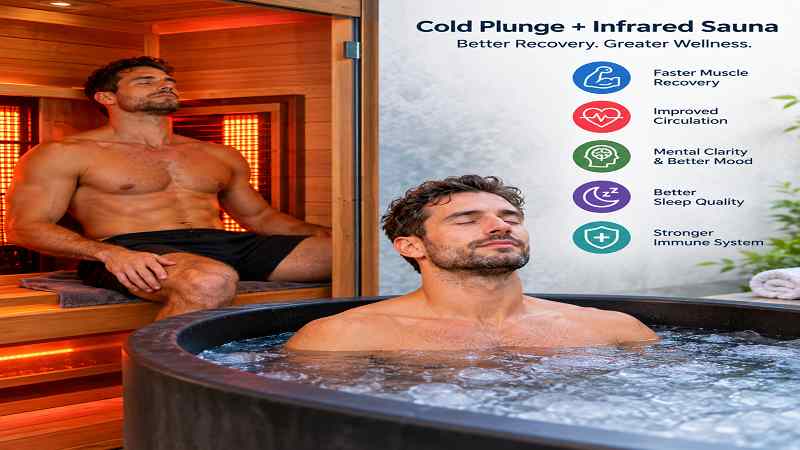
In today’s health and wellness spaces, cold plunging and infrared sauna sessions are becoming an increasingly popular duo. The benefits cold plunges and infrared saunas have on their own are impressive. Cold plunges reduce inflammation, increase focus, and are known to benefit athletes. Meanwhile infrared saunas relax muscles and optimize recovery. What happens when you combine the two?
Contrast therapy is becoming increasingly popular, especially among athletes, for its recovery and health benefits. Cold plunging and infrared sauna therapy peak individual health benefits when both are used together. Using both in a tandem fashion creates a physiological push and pull on the body’s different systems.
In this guide, we will break down how cold plunging and infrared sauna therapy work separately, how they work together and combine to create further positive health outcomes, and how you can safely incorporate both infrared sauna therapy and cold plunge therapy into your daily life. Whether you are a cold plunge veteran or someone who is just starting to use an infrared sauna blanket in your home, this guide is here to maximize your gains.
Understanding How Heat and Cold Therapy Work Separately Helps Explain Why Combining the Two Works So Well
Looking separately at each therapy gives an insight into the benefits that may be achieved from using both therapies.
Infrared saunas are different from traditional saunas. With infrared saunas, a light source penetrates the skin and heats your body. Because of that, infrared saunas operate at lower temperatures, typically 120-150 degrees Fahrenheit. Due to deeper penetration, heat from an infrared sauna gently and therapeutically increases blood flow, thereby delivering nutrients and increasing oxygen to muscles and clearing waste products.
Cold plunge therapy occurs with a rapid constriction of the blood vessels, called vasoconstriction, and occurs when a person fully immerses their body in cold water, which is generally between 39 and 55 degrees Fahrenheit. Cold water directs blood toward the center of the body to protect vital organs. The result of this is a burst of the hormone and neurotransmitter norepinephrine, which causes people to feel more alert and help maintain optimum mood levels. For many, the initial cold shock therapy is an immense barrier, but with the passage of time an amazing calmness and clarity follows.
When you combine these therapies, blood vessels learn to rapidly alternate between dilation and contraction. This rapidly alternating process is known as a “vascular pump.” It is thought that this, in combination with heat or cold therapy, may deliver improved and more effective circulation. This theory is based on the body’s ability to quickly adapt to the changing environment, and as such, may closely parallel what some call “ice plunge,” in which participants quickly adapt to a stressful and recovery focused “cycle.”
The Additional Benefits of Combining Contrast Therapy
So what’s the big deal about doing both, as opposed to sticking to just one method? Research, as well as proven results, provides some very strong arguments.
Improved Muscle Recovery
For many years athletes have regularly resorted to hot and cold baths, showers or contrast therapies. During the infrared sauna stage you create increased circulation and relaxation of tight muscle tissues. Conversely, the cold plunge creates a rapid decrease in inflammation and swelling. It is this combination of healing therapies that is said to help relieve delayed onset muscle soreness and speed recovery post rigorous exercise.
Improved Cardiovascular Function
One of the ways that contrast therapy builds the circulatory system is by stretching and contracting the blood vessels. It also can help to improve the elasticity of the blood vessels and help keep blood pressure regulated. Studies have shown that there are benefits to cardiovascular health with heat stimulation similar to the benefits one would see from moderate exercise. It has been said that combining heat and cold stimulation can aid in the training of the circulatory system.
Mental Clarity and Mood Support
Both cold and heat stimulation have separate effects on the nervous system. Heat stimulation is known for relaxing the body by activating the parasympathetic nervous system or the rest and digest system. Cold exposure activates the sympathetic nervous system and releases dopamine and norepinephrine. The stimulation of the nervous system by cold and heat therapy creates an emotional state of both calmness and excitement.
Better Sleep Quality
Users report that evening contrast therapy sessions have helped them to relax, and fall asleep quicker. The infrared sauna stimulates a relaxation response and provides a slight increase to core body temperature. The temperature of the body dropping after the cold exposure mimics the natural temperature drop that tells the body it is time to sleep.
Immune System Support
Several studies show that white blood cell activation is stimulated by cold exposure. There are also studies that show that regular exposure to infrared saunas can give your body a good stress response that can help your immune system. Cold exposure and sauna use shouldn’t be the only ways that you try to strengthen your immune system. You should try to get enough sleep, eat well, and do other activities that help strengthen your immune system. However, if you decide to make contrast therapy part of your routine many people report that sick days are fewer during the year.
How to Structure an Effective Contrast Therapy Routine
Up next, let’s discuss how you can make this part of your weekly routine. There is no optimal way to do this, but there are a few universal guidelines that almost every chronic user follows.
Pick Your Starting Order
Most users have their infrared sauna session as their first step and their cold plunge as their last step. Most users like this order, as the end of the commercial cold plunge should help you feel awake as opposed to the typical sleepy feeling you get after bathing in the warm sauna. Of course, using colds as a way to close your pores can only be beneficial if you plan to leave the house afterwards.
Most people prefer to be relaxed if they plan to be out for the night at the end of their routine, so they use the rest in the opposite order of the previous example.
Again, there is no real wrong way to order your routine, it all comes down to your preferences and goals.
Set Realistic Timelines
Most people will see results from a 20 to 40 minute infrared sauna session, though it also depends on personal preferences and adaptability. It takes time for an individual’s body temperature to rise and for sweat to start flowing. Because of this, many people will take a 2 to 5 minute cold plunge after their session. Start with shorter sessions, and eventually work your way up to longer sessions.
Think About Each Round
Some people prefer to do exactly one sauna and one cold plunge. Others prefer to do this many times (2-3) in one single session. While this can be helpful for building up the vascular pumping effect, it can also tire your body out more. This type of therapy is typically done by more experienced people.
Think About How Much You Can Conveniently Do
Two to four sessions per week is a good amount of sauna sessions to start out with, though more experienced users can do it more regularly. For example, motivated and active users will want to use it more regularly than someone using it mainly to cope with stress.
Think About Hydration
Because of the sweating, it is very important to stay hydrated before and after infrared saunas. People often report light headedness. To combat this, hydration before cold exposure is critical, preferably with electrolytes.
Safety Considerations and Common Mistakes to Avoid
There are important safety considerations to take into account even with healthy adults.
The first safety issue is that any adult with cardiovascular issues, uncontrolled hypertension, heart disease, or other heart related issues should speak with their physician prior to engaging in any type of contrast therapy or practice. Rapid changes in blood vessel diameter significantly alters the workload of the heart. A practice that feels invigorating to a healthy individual could be highly dangerous to someone with a cardiac or other related issues.
One of the safety issues is the use of contrast therapy in combination with alcohol. Alcohol use has been associated with an inability to regulate one’s temperature and an increase in the chance of losing consciousness and fainting, specifically during the cold plunge phase.
One of the key safety issues in contrast therapy is ignoring the signals your body is sending you to stop. If you start to feel any adverse effects while participating in either the heat or cold phase including lightheadedness, nausea, or shortness of breath, immediately stop the practice. The objective of contrast therapy should never be to test your endurance.
As a final consideration for safety, especially for those engaging in their first sessions of cold plunge, keep in mind that one can experience cold water shock. This can cause you to gasp and, in some cases, become disoriented and unprepared.
For more information, see the following articles: safety considerations and common mistakes to avoid
Give your body time to adjust to changes in temperature. Forgetting to cool down after a sauna and jumping straight into cold water is a shock to the system. One or two minute breaks give you time to cooldown and control the discomfort without losing any value from your session.
Conclusion
Using both infrared saunas and cold plunge therapy in a single practice is used to benefit the body’s circulatory, nervous and immune systems in ways neither practice on their own is capable of. The positive effects of the practice on recovery from training and stretching, cardiovascular health, mental function, and sleep are experienced and documented by a highly engaged community of practice.
The effects of sauna and plunge practice are cumulative, and regular, consistent use is more important than the length of time used. Start small, experiment with the practice, and develop a consistent routine. Incorporating the contrast of heat and cold therapy will be of immense benefit, whether you want to recover from training or help manage stress.